


Blog
How to read COA peptides without chaos



If you are wondering how to read the COA of peptides, it is not a formal detail. The COA often separates the overview from the documented information. research-grade product From the product offering, where the basic parameters are unclear or incomplete. In the research peptide segment, the certificate of analysis only has practical value when you know which data to check and what it actually means. Therefore, it is important to know how to read peptide COAs and understand their significance.
The COA, or Certificate of Analysis, is a document linked to a specific batch. Its purpose is not to create an impression of quality, but to document it through measurable parameters. Therefore, when it comes to peptides, one does not look at just one number regarding purity. The consistency of the substance name, batch, analysis method, result, date, and document identification is important. If any of these parts is missing, transparency is weakened.
Simple steps for reading the COA of peptides will help you get a more accurate picture of the product’s quality.
How to read COA peptide step by step
First, verify that the COA belongs to the product you are tracking exactly. The peptide name must be spelled without ambiguous abbreviations, and the batch number on the certificate should match the batch number on the product or on its labeling. If the document is not linked to a specific batch, its value is limited. In practice, this means that even a properly-looking certificate may not prove anything for the piece you have in front of you. Therefore, it is crucial to know how to read peptide COAs correctly and thoroughly.
Then, take a look at the actual analysis result itself. Most often, this is a purity data expressed in percentages. This data is often the first point of reference for buyers, but it is not enough in itself. Purity above 99 % is a strong parameter, but it still makes sense to check the method used to determine it and whether the result is given as a specific value, not as a general statement without measurement.
Learn how to read the COA of peptides so that you can properly evaluate the information presented in the certificates.
The format of the report is equally important. A serious COA does not look like an advertising flyer. It has a clear structure, identifying information, and results in a technical format. If the document uses mostly marketing language and minimal analytical data, it is a weak signal, regardless of how convincingly it looks.
Name of the substance and batch number
It is also important to know how to read the COA of peptides and interpret all the relevant information that affects your confidence in the product.
The foundation is precise identification. The peptide name must be stated unambiguously, ideally without any free-trade descriptions. With products like BPC-157, TB500, GHK-CU or RETATRUTIDE It is important that COA does not work with inaccurate labeling, which can create room for substitution. Remember how to read COA peptides to avoid confusion.
The batch number is crucial because quality is not generally assessed at the product level, but at the specific production batch level. If the seller provides a COA without the batch number or with a generic document for all packages, transparency decreases. In a catalog-based assortment, the link between the product, packaging, and batch should be clear.
Cleanliness is not the only data point
When COA is mentioned, most people are only looking for the percentage of purity. That is understandable, but incomplete. Purity alone does not tell us when the analysis was performed, what method was used, on what batch, and in what context the result was confirmed.
Therefore, it makes sense to read the purity data along with the other items. For example, if you see a value of 99.4 %, this is only relevant if the document also mentions the specific analytical method and the sample identification. Without that, it is more of a declaration than usable documentation.
Which items on the COA have the greatest weight
With peptides, you will most commonly encounter data such as appearance, identity, purity, sequence, or molecular mass, depending on the type of documentation and the scope of the testing. Not every COA will contain everything in the same way, but some fields are more informative than others.
Remember that knowing how to read the COA of peptides will allow you to better assess the product's quality and identify potential risks.
When evaluating COAs, it is essential to remember how to read the COAs for peptides and to take into account all important factors.
Appearance is an auxiliary data, not the main proof of quality. Information such as white lyophilized powder may be acceptable, but in itself it does not confirm purity or identity. Much more important is the analytical part of the document, which you should know how to read the COA of peptides with an emphasis on relevant data.
The identity or sequence confirms that the tested substance corresponds to the declared peptide. For some products, the molecular weight or the result of a mass analysis is also provided. This helps verify that it is not just a generally labeled powder, but a substance with parameters corresponding to the declaration.
Purity is most often determined chromatographically, typically via HPLC. If the purity is stated on the COA without a method, the document is less reliable. If it states that the purity was determined via HPLC, it is already a significantly more usable data point.
Why HPLC on peptide COAs is essential
Always ask yourself how to read the COA of peptides, and focus on the relevant data that confirms the quality.
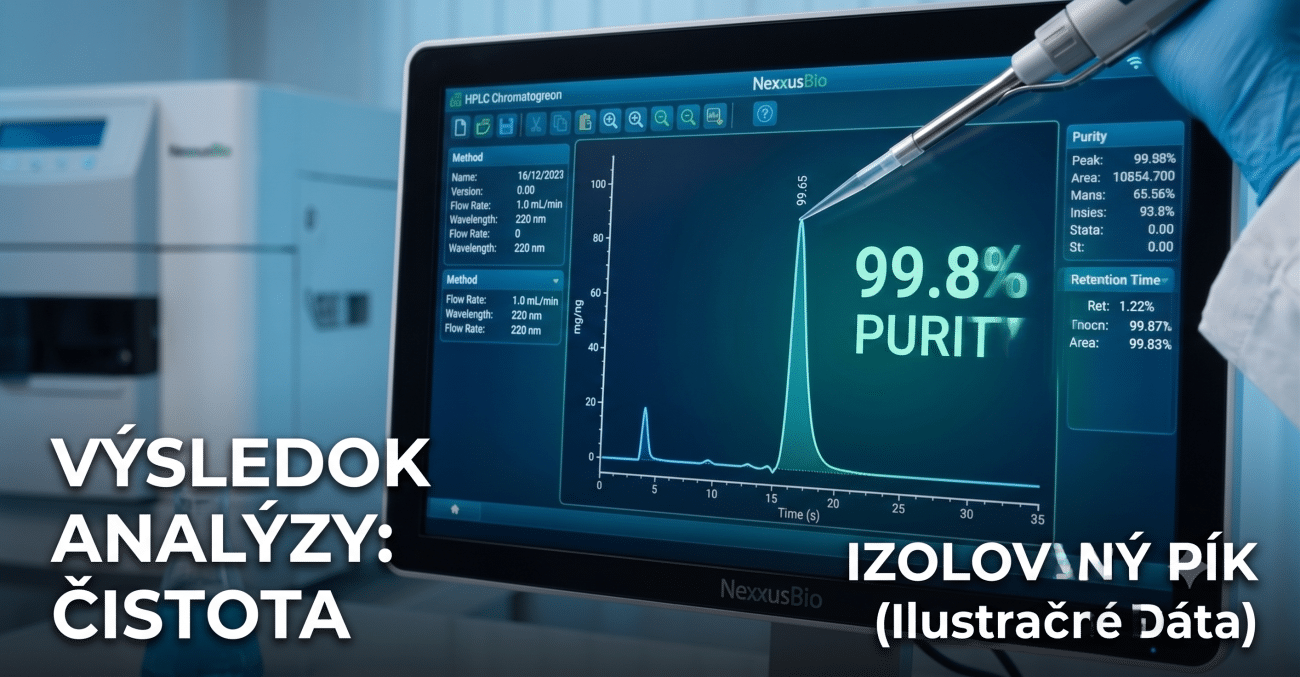
If you are interested in how to read a COA Janoshik Peptides are responsible; when using the analysis method, it pays to slow down. HPLC is not just a fancy abbreviation. It is a common analytical method used to determine the purity and separation of components in a sample. For the customer, this means that the purity number was not obtained in a vacuum, but is linked to a specific testing procedure.
However, this does not mean that every COA with HPLC is automatically flawless. It also depends on whether the document provides a logical whole. If you have the name of the substance, the batch, the date of the analysis, the HPLC result and the signature or authorization of the laboratory, it is a much more convincing set of data than with a document with one sentence and one percent.
Date, signature, and laboratory trace
The date of issue or the date of analysis is another thing that is worth checking. Not because the older document is automatically invalid, but because without a time constraint you cannot attribute the result to a specific production. In products with an emphasis on batch consistency, a time trace is a common component of transparency.
Knowing how to read COA peptides will help you avoid unnecessary errors when evaluating products.
Signature, stamp, or other form of authorization increases the credibility of the document. It does not always have to be a manual signature in the traditional sense, but the COA should be clearly issued to identifiable entities. If you cannot assign the document to a laboratory or manufacturer, its authenticity is weak.
The overall impression of consistency is also important. A well-prepared COA should have no discrepancies between the substance name, batch, results, and formatting. If the document appears assembled from multiple templates, contains inconsistencies in the peptide name, or contains meaningless technical data, it is prudent to be cautious.
Most common errors when reading a COA
The first mistake is to focus only on the highest possible percentage of purity and ignore the rest of the document. A higher number looks good, but without a method, batch, and identification, it has limited value. A more practical approach is to assess the entire document as a whole.
The second mistake is to confuse the product description with the COA. The fact that the research grade, high purity or analytical quality is stated on the page does not mean that these claims are supported by the batch documentation. The COA is a proofing layer, not a marketing statement.
The third mistake is overlooking discrepancies between packaging and documentation. If, for example, you have a different quantity, a different form of the product, or an inaccurately stated concentration, you need to pay attention. In a transparent sales process, the form, quantity, and documentation must be consistent.
Finally, if you learn how to read the COA of peptides, you will become a more informed customer and be able to make better decisions.
Gaining knowledge about how to read COA peptides is a key step towards successful market orientation in the peptide industry.
A good COA will teach you how to read COA peptides and ensure that your decisions are based on reliable information.
What the usable COA looks like in practice
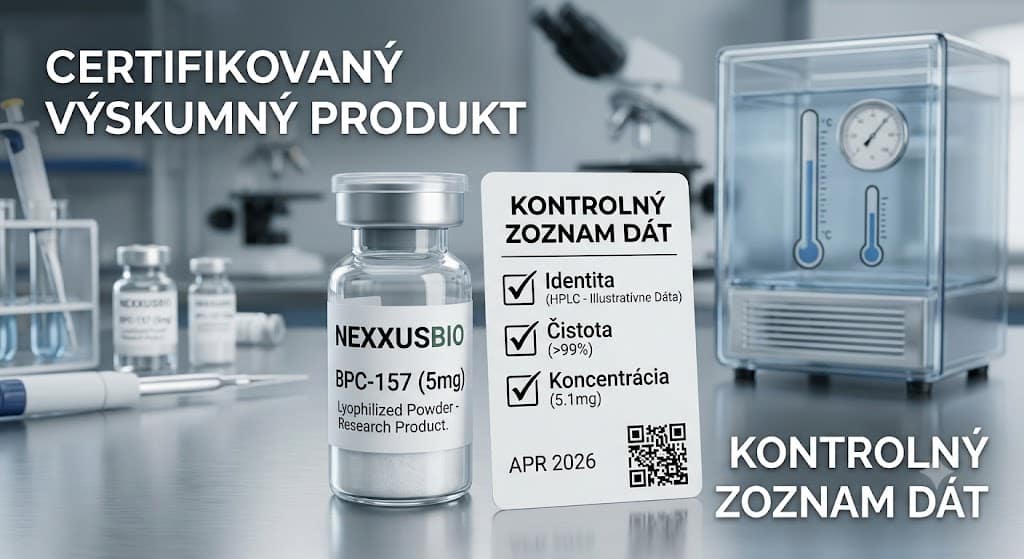
The usable certificate need not be extensive, but it must be readable and specific. It should contain the name of the peptide, the batch number, the date, the analytical method, the result, and the identification of the issuing party. If these elements are present and mutually supportive, the COA serves its purpose.
Conversely, a weak document is generic, without a batch number, without a date, or without a clear measurement method. It may state purity, but does not explain how this figure is derived. For a customer who relies on quality and consistency, such a document is less convincing.
At this point, the advantage of a systematically processed product range is clear. When products are clearly separated by form, packaging, quantity, availability, and COA documentation, the selection process is faster and at the same time safer from a data orientation perspective. This is exactly the principle behind the NEXXUS BIO approach as well.
When COA is not enough by itself
Even a high-quality COA is only one part of the picture. When evaluating a product, it is also important to consider whether the seller consistently provides information about the product form, the quantity in the package, batch logic, and restrictions for research, analytical, or collecting purposes. If the COA is in order, but the rest of the presentation is unclear, there is still room for doubt.
Likewise, not all products will have identical documentation. The scope of data may vary depending on the manufacturer, laboratory, or type of test. However, this difference must not be a pretext for missing key information. Without a clear identity, batch number, and analytical result, the relevance of the COA is reduced.
When reading the COA, it is therefore worthwhile not having just one question, but three. Does this document belong to a specific batch? Is the result supported by an analytical method? And does the document fit into an overall transparent presentation of the product? If you can answer all three questions without making assumptions, you are on the right track.
A good COA should not complicate your orientation. It should speed up the process, clarify and confirm that the real documentation supports the declared parameters. That is exactly why it is worth reading it calmly, technically and without getting carried away.