


Blog
Acetic acid laboratory use in practice


In a laboratory environment, details matter. When working with samples that depend on pH, stability, and reproducibility of the procedure, acetic acid has a laboratory-specific application. It is not a universal solution for every protocol, but rather a standard reagent that is used where a predictable acid environment and clearly defined work parameters are required.
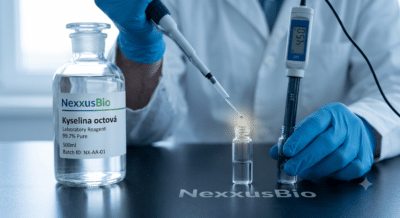
What is acetic acid laboratory use?
Acetic acid is one of the commonly used laboratory chemicals. In practice, it is used in pH adjustment, solution preparation, processing of certain types of samples, and in selected analytical procedures. Whether it is suitable for a specific purpose depends on the concentration, required purity, compatibility with the sample material, and whether the methodology tolerates its chemical properties.
The term “laboratory use” is also important in terms of categorization. It means that the product is intended for research, analytical, and technical processes in a controlled environment. This is not an open-ended term. When selecting a reagent, it is necessary to observe the declared form, concentration, packaging, documentation, and consistency of the batch, because these are the data that determine whether the result of the work will be comparable between individual experiments.
Why acetic acid is used in the laboratory
The reason is simple – it is a weak organic acid with a well-known behavior profile. In many protocols, it is useful precisely because it allows for a more gentle acidification than strong mineral acids. Where a too aggressive change in the environment could affect the integrity of the material or the result of the analysis, acetic acid can be a more practical choice.
However, this does not mean that it is always suitable. With some analytical methods, it can interfere with detection; with others, it may be unsuitable due to volatility, odor, or compatibility with the equipment used. Therefore, the decision is not based on the name of the chemical, but on the methodology. This is precisely what distinguishes disciplined laboratory practice from improvisation.
Most common areas of use
Adjusting the pH of laboratory solutions
One of the most common uses is the adjustment of pH in solutions where an acidic or slightly acidic environment is required. In such cases, not only the target pH value is monitored, but also how the particular acid will affect the stability of the other components in the system. Acetic acid is useful where controlled and relatively predictable acidification is required without unnecessarily harsh interference with the matrix.
When adjusting pH, it is important to distinguish between technical feasibility and methodological suitability. Two solutions can have the same pH, but different chemical behavior depending on the acid used. If the protocol requires an acetate system specifically or tolerates the presence of acetate ions, acetic acid makes sense. If not, it is necessary to choose a different chemical route.
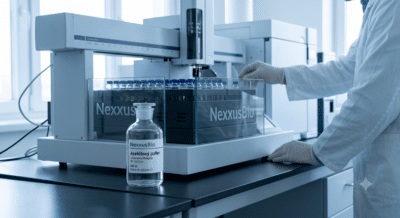
Preparation of foams and work media
In laboratory practice, acetic acid is also used in the preparation of acetate buffers. These are important in procedures where a stable pH within a specific range is required. Again, the suitability of the buffer depends on the purpose. Some analytical or research applications benefit from the acetate system, while others may be limited by it.
Accuracy is crucial when preparing puff pastry. It is not enough to know that it is acetic acid. The concentration of the stock solution, purity, method of dilution, and the record of each batch used during preparation are relevant. It is precisely the transparency of these parameters that is crucial for the reproducibility of results.
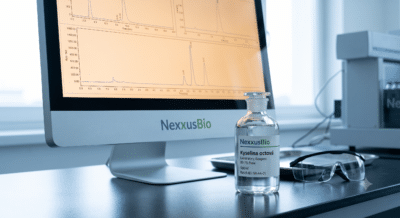
Acetic Acid 0.6%
Processing and reconstitution of selected research materials
In more specialized areas, acetic acid is also used in the handling of certain research materials, where it can help create a suitable chemical environment for temporary manipulation or dissolution. However, increased caution is required here. Not every material reacts similarly to acidic conditions, and not every protocol considers acetic acid to be compatible.
It is in this area that most errors occur when selecting reagents inaccurately. Not only the acid itself is crucial, but also its laboratory quality, concentration, and whether the use is explicitly stated in the work procedure or internal methodology. If such support is lacking, the experiment becomes more difficult to reproduce.
Analytical and cleaning procedures
Acetic acid has its place in selected analytical and technical operations as well, including preparing mobile phases, processing samples, or cleaning laboratory materials in cases where such a step is methodically justified. However, it is not a universal cleaning agent for all equipment. Material compatibility, residual contamination, and requirements for subsequent analysis must always be verified.
Even a small deviation in reagent purity can have a noticeable impact on analytical applications. Therefore, when selecting a product, not only the product name is evaluated, but also the documentation, declared quality, and consistency between deliveries.
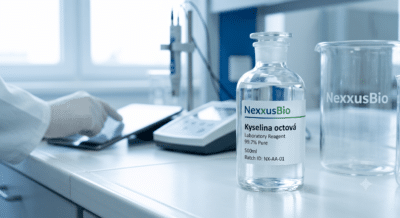
Analytical context and Data
What to focus on when choosing acetic acid for the laboratory
For products intended for laboratory use, price or package size are not enough. It is important that product data be clear and verifiable. Research institutions and technically oriented customers usually look at four parameters at the same time – concentration, purity, packaging form, and documentation.
The concentration determines how exactly the reagent will be handled in the subsequent steps. Purity determines whether the chemical is also suitable for more sensitive analytical or research tasks. Packaging is important not only from a logistical perspective, but also in terms of handling, stability after opening, and the risk of contamination. Documentation also forms the basis for internal record-keeping and quality control.
In the research reaction segment, it is therefore advantageous if the supplier presents the parameters directly and without ambiguity. For the customer, it is more convenient to see the form, quantity, availability, and basic qualitative data immediately, rather than having to monitor them additionally. This approach reduces errors in ordering and also in actual use in the laboratory.
Limits and practical trade-offs
Not always a weaker acid is better
Acetic acid is often perceived as a „softer“ option, but that in itself is not an advantage in every situation. If the methodology requires very precise and rapid acidification or a chemical environment without acetate anion, a different reagent may be more suitable. Therefore, the milder nature does not automatically mean universal applicability.
Scent and volatility can be practical factors
Comfort of work and operational conditions also play a role in routine laboratory operations. Acetic acid is volatile and has a characteristic odor, which can be relevant when handling it frequently. In a well-organized laboratory, this is not a hindrance, but it is a variable that must be taken into account in both work procedures and storage.
Compatibility with the analytical method is not automatic
Some methods tolerate the presence of acetic acid or acetates without problems; others may be sensitive to it. This is one of the reasons why laboratory chemicals should not be relied upon for general recommendations. A validated or internally verified procedure is decisive.
Safety, record-keeping, and work discipline
Even with chemicals that are among commonly used reagents, the standard of work must remain the same. This means proper labeling, monitoring of concentrations, record-keeping of opening times, proper storage, and consistent handling according to the internal workplace rules. The biggest problems in the laboratory often do not arise from the chemicals themselves, but from undisciplined operations.
It is also important to separate the laboratory use from other interpretations. Products of this type belong to the research and analytical context, where each use is based on procedure, documentation, and control. If these boundaries become blurred, the accuracy and credibility of the entire work are lost.
When does acetic acid give the greatest sense of laboratory use?
Its greatest sense is when acetic acid is chosen intentionally, not by habit. That is, in situations where the methodology works with the acetate system, where controlled acid treatment of the environment is required, or where its properties correspond to the requirements of a specific research procedure. It is less suitable where it could complicate subsequent analysis, affect the stability of the material, or introduce an unwanted variable into the experiment.
For a customer that focuses on research reagents, it is therefore reasonable to evaluate this product in the same way as any other laboratory material – by parameters, not by general familiarity with the name. Even in seemingly simple chemistry, concentration, purity, documentation, and batch consistency are decisive factors. These factors separate usable laboratory standards from a confusing array without a clear qualitative framework.
For laboratory work to be accurate, the reagent must not only be available; it must also be clearly labeled, methodically defensible, and predictable in every subsequent batch.
Important notice: The content of this article serves solely for informational, educational and academic purposes. The information provided here is based on available scientific studies and professional literature on research chemical substances. In no case does the text constitute medical recommendations, diagnosis, instructions for treatment, or an invitation to human or veterinary consumption. The products mentioned in the article, as well as the entire range of the NEXXUS BIO e-shop, are classified as research chemicals and laboratory reagents intended strictly for use in a controlled scientific environment (Research Use Only). The website operator assumes no responsibility for the incorrect interpretation of the text or any misuse of the described materials.