


Blog
TB-500 Peptide ≥99% HPLC | Nexxus Bio

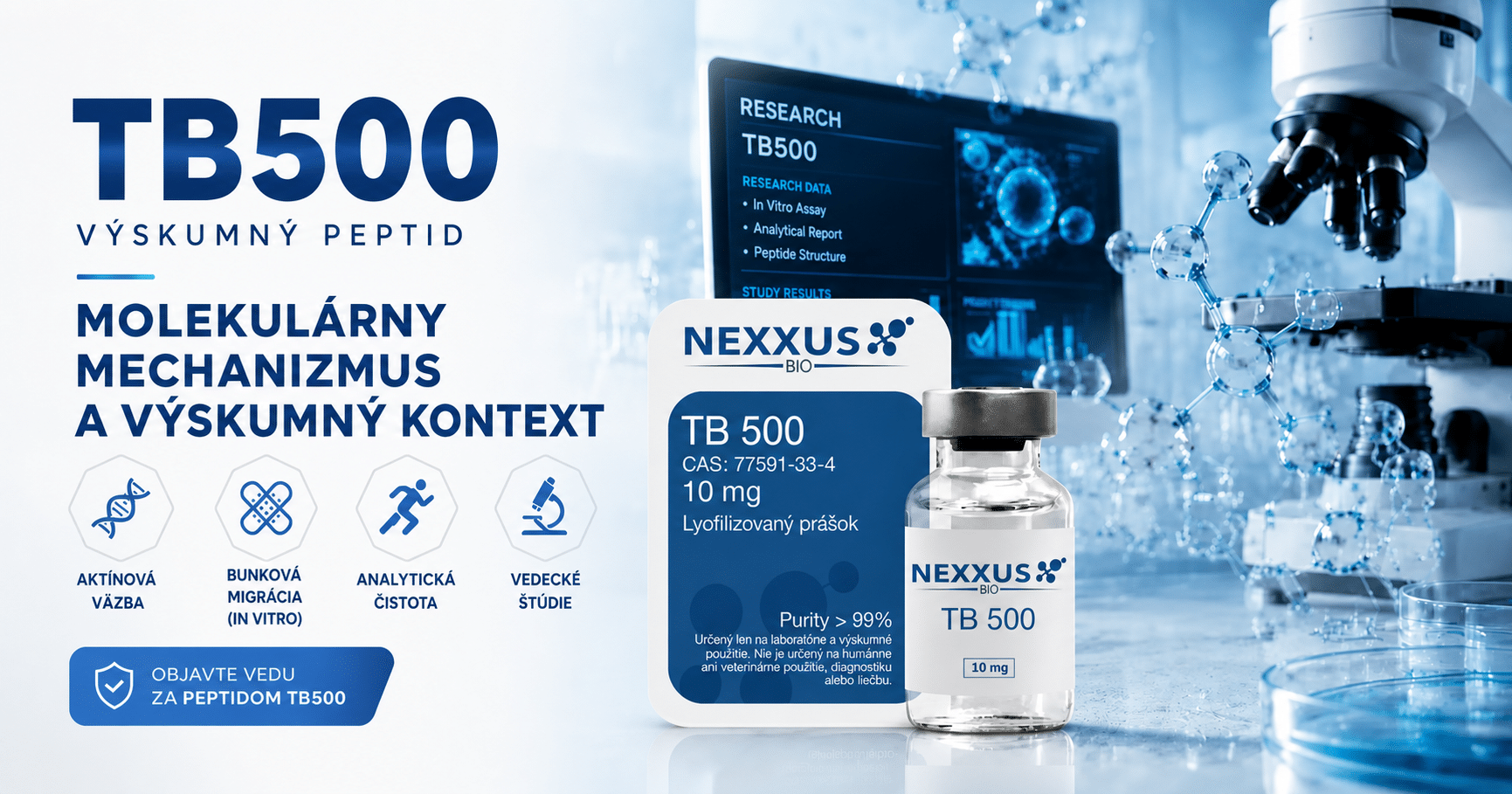
Introduction – Why is TB-500 one of the most studied peptides in the world?
The world of peptide research has grown enormously in recent decades. Scientists worldwide are studying various biologically active molecules that play a key role in healing processes, tissue regeneration, and cellular communication. One of the most interesting and most studied peptides today is TB-500, commonly also referred to as Thymosin Beta-4 (Tβ4).
This peptide has attracted the attention of researchers worldwide thanks to its unique mechanism of action and the wide range of biological activities observed in preclinical studies. Database PubMed records more than 1,000 scientific articles they are indexed under the term Thymosin Beta-4 – and their number is growing every year.
In this article we will look at TB-500 from a purely from a scientific and research perspective – its structure, mechanism of action, results of studies in cell cultures and animal models, as well as the prospects for its future scientific investigation.
📌 Important notice: All information in this article is purely of a research nature. TB-500 is not approved for human therapeutic use outside the framework of clinical studies. The article serves solely for educational and informational purposes in the field of scientific research.
What is TB-500? History and origins
Thymosin Beta-4 was first isolated in the year 1966 biochemist By Allan Goldstein from the thymus (the gland of the thymus) of cattle. The thymus is an organ of the immune system that plays a crucial role in the maturation of T-lymphocytes. Goldstein and his team originally studied a whole group of peptides called thymine, While Thymosin Beta-4 later turned out to be one of the most biologically active representatives of this family.
TB-500 is a synthetic version in the active segment of endogenous Thymosin Beta-4. Specifically, it is a sequence of amino acids 17 to 23 from the entire Tβ4 chain – the so-called. Active domain responsible for most of the biological properties of the entire peptide. The naturally occurring Thymosin Beta-4 is 43-amino acid polypeptide, which is present in mammals in practically all cells and tissues.
An interesting fact is that Tβ4 belongs to the the most abundant intracellular peptides Absolutely not. High concentrations were measured mainly in blood platelets, white blood cells, and various mesenchymal cells. This ubiquity indicates its fundamental role in cellular biology.
Chemical structure and properties of TB-500
From a chemical perspective, TB-500 is a relatively small peptide with specific properties that allow for its biological activity:
| CHARACTERISTICS | VALUE / DESCRIPTION |
| Chemical name | Thymosin Beta-4 (active fragment) |
| Number of amino acids (TB-500) | 17 amino acids (Tβ4 fragment) |
| Number of amino acids (Tβ4) | 43 amino acids |
| Molecular weight | ~4 963 Da (Tβ4) |
| Solubility | Excellently soluble in water |
| Structure | Linear peptide, without disulfide bonds |
| Key domain | Actin-binding domain LKKTETQ |
| Genes encoding Tβ4 | TMSB4X (X-chromosome) |
| Stability | Relatively stable, sensitive to temperature changes |
One of the most important structural aspects of TB-500 is the presence of a sequence LKKTETQ – so-called. actin-binding domain. It is this sequence that is responsible for the binding of the peptide to G-actin (globular actin) and influences the dynamics of the actin cytoskeleton – which has far-reaching consequences for cell motility and migration.
Mechanism of action – How does TB-500 work at the cellular level?
Understanding the mechanism of action of TB-500 is the key to understanding why this peptide is so intensively studied. Scientists have identified several main molecular pathways:
1. 🧬 Regulation of actin cytoskeleton
The best documented mechanism of TB-500 is its ability to sequestrate G-actin (monomeric actin). By binding to G-actin, TB-500 regulates the balance between the globular (G) and filamentous (F) actin in the cell. This regulation has a direct effect on:
- Bunker migration – the cells can move more efficiently and navigate to the sites of injury
- Cellular proliferation – Actin regulation affects cell division
- Morphology of cells – shape and structural integrity of cells
Recent research (Keplinger et al., 2026, J Biol Chem) further clarify the complex interactions of actin-binding molecules including Thymosin Beta-4, thereby expanding our understanding of actin nuclear dynamics.
2. 🩸 Angiogenesis – formation of new blood vessels
TB-500 was identified in several preclinical studies as proangiogenic factor. In research in mouse models, Thymosin Beta-4 stimulated the formation of new capillaries and blood vessels through:
- Activations endothelial cells
- Increased expression VEGF (Vascular Endothelial Growth Factor)
- Support for the formation of new vascular connections (anastomoses)
This property is of great interest from a research perspective, because angiogenesis is an essential step in tissue regeneration after injury or ischemic damage.
3. 🛡️ Anti-inflammatory and immunomodulatory properties
Several studies in cell cultures and animal models have demonstrated modulation of the inflammatory response after administration of Tβ4. Specifically, the following was recorded:
- Reduced production pro-inflammatory cytokines (e.g., IL-1β, TNF-α)
- Increased production anti-inflammatory mediators
- Modulation of activity NF-κB signaling pathway – key regulator of inflammatory processes
- Research by Sun et al. (2025) in World Journal of Gastroenterology In addition, he documented the role of Tβ4 released by the fat cells in regulating the intestinal barrier through IL22RA1/JAK1/STAT3 signalling line
4. 🔄 Activation of stem and progenitor cells
Studies on cardiac models showed that Thymosin Beta-4 can activate epicardial progenitor cells – cells with the potential for differentiation into different types of heart cells, including cardiomyocytes and smooth muscle cells of the vessels.
5. 💊 Anti-apoptotic effects
The ability of TB-500 was observed in models of oxidative stress and ischemia-reperfusion. reduce cellular apoptosis (programmed cell death) through:
- Activations PI3K/Akt signaling pathway
- Decreases in expression of pro-apoptotic protein Bax
- Increases in the expression of the anti-apoptotic protein Bcl-2
6. 🧠 Stabilization of the blood-brain barrier (BBB)
A more recent study by Stewart et al. (2025, Scientific Reports) demonstrated that Tβ4 stabilizes hypoxia-induced dysfunction in brain microvascular endothelial cells through S1PR1-dependent mechanisms – which opens up new possibilities for research into traumatic brain injuries (TBI) and cerebral ischemia.
Overview of key research areas
🫀 Cardiovascular research
Cardiology represents one of the most intensively studied areas in terms of potential use of Thymosin Beta-4. Breakthrough study Zhang et al. (2025) published in a prestigious journal Cardiovascular Research demonstrated that recombinant human Thymosin Beta-4 improves ischemic heart dysfunction Thus, in mouse models as well as in patients with acute ST-elevation myocardial infarction (STEMI) after reperfusion. This is one of the most significant cardiology research results in this field.
Other cardiology studies include:
- Reduction of the size of the necrotic zone after a heart attack
- Improvement of the left ventricle ejection fraction
- Reduction of post-infarction fibrosis
- Activation of epicardial progenitor cells
🧠 Neurological research
Neurodegenerative diseases: A fundamental study Ou et al. (2026) v International Immunopharmacology The therapeutic potential of peptides derived from Thymosin Beta-4 – including directly TB-500 and Ac-SDKP – was investigated in Alzheimer’s disease. The results showed a reduction in neuroinflammation and neurite atrophy in both in vitro models and in 5xFAD mice. in vivo – which indicates the potential for improving memory.
Blood-brain barrier and TBI: Stewart et al. (2025) document the protective function of Tβ4 in hypoxia-induced damage to cerebral microvasculature via S1PR1 receptor mechanism.
Spinal cord injuries: Preclinical studies in rat models of spinal cord injury demonstrated improvement in neurological function, reduction of demyelination, and reduction of inflammatory infiltration at the site of injury.
🦴 Research of the musculoskeletal system and the locomotor system
Overview study Mendias & Awan (2026) v Sports Medicine It specifically focuses on the pharmacological mechanisms, safety profile, and regulatory status of peptides – including TB-500 – in the context of musculoskeletal injuries. This is the most comprehensive current scientific review in this field.
Muscles and ligaments: Studies on animal models of tendon injuries showed accelerated tendon regeneration and improved biomechanical strength of the regenerated tissue.
Muscles: In models of muscular dystrophy (MDX mice) and acute muscle injuries, a reduction in fibrosis, increased regeneration of muscle fibers, and activation of satellite cells were observed.
👁️ Ophthalmological research
This area represents one of the most clinically proven directions of Tβ4 research:
Cornea healing: Study Nguyen et al. (2025) v Investigative Ophthalmology & Visual Science focuses on engineered tandem thymosin peptides to overcome the limitations of natural Thymosin Beta-4 – short biological half-life and cost of synthesis – while maintaining its beneficial effect on corneal healing.
Dry eye (DED): The company RegeneRx Biopharmaceuticals It conducted Phase II clinical study with locally applied Tβ4 (RGN-259) in dry eye syndrome with proven positive results.
🩺 Nephrological research – a new research direction
One of the newest and most promising areas of research is nephrology. A review study Di et al. (2026) published in a journal Peptides Identifies Thymosin Beta-4 as emerging therapeutic candidate for kidney diseases, While emphasizing its evolutionary conservatism (the TMSB4X gene), and its multi-organ protective potential.
🔬 Oncological research
Recent proteomic study Simiczyjew et al. (2026) v Journal of Proteome Research They identified Thymosin Beta-4 as one of the proteins increased in secretion by resistant melanoma cells compared to control cells – indicating its potential role as a biomarker or therapeutic target in melanoma. However, this area is controversial and requires further research.
Study Guo et al. (2025) v Medical Oncology In addition, it was shown that the Tβ4-17 fragment increases the chemosenitivity of ovarian cancer cells to cisplatin through modulation. NF-κB signaling pathway – which opens up interesting perspectives in oncology research.
Veterinary research – TB-500 in horses and dogs
An interesting chapter in the history of TB-500 research is its study of its effects on the veterinary medicine. Thymosin Beta-4 was tested in horses in the context of:
- Tendinopathy – tendon injuries are a common and serious problem in racehorses
- Damaged ligaments – suspended sentence and other structures
- Musculoskeletal injuries in general
Research results in horses indicated a potential improvement in the histological quality of regenerated muscle tissue and a shortening of the recovery time compared to control groups. In dogs, the research focused primarily on injuries to joints, ligaments, and neurological conditions.
Pharmacokinetics and distribution research
From a pharmacological research perspective, it is important to understand how TB-500 behaves after administration:
Biological availability: Studies in animal models have shown that TB-500 has the ability to distribute into various tissues after systemic administration, with increased accumulation observed at sites of injury.
Halfway through the breakup: Studies suggest a relatively short biological half-life of the peptide. This limiting factor is precisely the subject of research into new engineering approaches – for example, Nguyen et al. (2025) are working on tandem peptide constructs with extended stability.
Metabolism: As a peptide, TB-500 is degraded by proteases into individual amino acids, which are recycled within normal metabolism.
Safety profile – what does the research say?
| ASPEKT | FINDINGS OF THE STUDY |
| Acute toxicity | Not demonstrated in standard preclinical models at tested doses |
| Genotoxicity / mutagenicity | Not proven in standard tests |
| Local tolerance | Good for local application (RegeneRx clinical studies) |
| Oncological risk | Subject of further research (increased expression in some tumors) |
| Regulatory status | Not approved for human therapy outside clinical studies |
| WADA status | Listed on the list of prohibited substances in sports |
TB-500 vs. BPC-157 – Comparison of the research profile
In the field of research into regenerative peptides, TB-500 is often mentioned in the context of BPC-157 (Body Protection Compound 157). Although both peptides are subject to intensive preclinical research, they have different mechanisms of action:
| CHARACTERISTICS | TB-500 (THYMOSIN BETA-4) | BPC-157 |
| Origin | Endogenous (thymus, TMSB4X gene) | Derived from gastric juice |
| Number of amino acids | 17 (fragment) / 43 (Tβ4) | 15 |
| The main mechanism | Actin regulation, angiogenesis, S1PR1 | Modulation of the NO system, angiogenesis |
| Main research areas | Heart, neurology, tendons, eye, kidneys | GIT, tendons, bones, neurology |
| Clinical trials | Yes (RegeneRx – ophthalmology, wounds) | Limited clinical data |
| Regulatory status | Not approved for therapy (outside of clinical studies) | Not approved for therapy |
| Number of PubMed publications | >1 000 | >300 |
Genomic expression, proteomics and epigenetics
Advanced research methods such as transcriptomics (RNA-seq), proteomics, and epigenetic analysis have revealed that Thymosin Beta-4 influences the expression of a wide range of genes. Among the most significant are:
- Genes for adhesion molecules (ICAM-1, VCAM-1)
- Genes for the extracellular matrix (collagen I, III, fibronection)
- Genes for growth factors (VEGF, FGF, IGF-1)
- Inflammatory signaling genes (NF-kB, COX-2, iNOS, IL22RA1/JAK1/STAT3)
- Genes of cellular apoptosis (BCL-2, Bax, caspases)
The proteomic study by Simiczyjew et al. (2026), which used comparative analysis of the secretion of melanoma cells, also showed that Tβ4 can serve as a biomarker for melanoma. biomarker of resistance for the treatment with BRAF/MEK inhibitors.
Current state of research and future perspectives
📊 Research activity by years (PubMed)
| PERIOD | NUMBER OF PUBLICATIONS (PUBMED) | TREND |
| 1979 – 2000 | ~234 | Slow growth |
| 2001 – 2010 | ~241 | Stable growth |
| 2011 – 2020 | ~398 | Significant increase (peak 2012: 69) |
| 2021 – 2026 | ~167 (continuously) | Stable high activity |
Ongoing research directions
- Cardiological regenerative medicine – clinical verification of the results of Zhang et al. (2025)
- Neurology and Alzheimer's disease – development of research Ou et al. (2026)
- Nephrological research – new area according to Di et al. (2026)
- Tissue engineering – combination of Tβ4 with scaffold materials
- Ophthalmology – ongoing clinical programs RegeneRx and tandem peptide constructs
- Oncology – research on the role of Tβ4 in chemoregulation and as a biomarker
Research challenges
- Complexity of biological systems – in vitro effects do not always translate into in vivo models
- Short biological half-life – subject of active engineering research (tandem-peptides)
- Mechanistic gaps – some observed effects await full clarification
- Regulatory challenges – a long and costly journey from preclinical to clinical application
Interesting facts from the world of TB-500 research
- 🔬 Thymosin Beta-4 is a coded gene TMSB4X placed on X chromosome – which makes it evolutionarily extremely conservative molecule
- 🐟 Homologues of Thymosin Beta-4 have been identified in a wide range of organisms from fish to mammals
- 🧬 Tβ4 is one of the few peptides present in high concentrations like intracellular, as well as extracellular
- 📚 More than 1000 articles are indexed on PubMed. 1,000 scientific studies (as of April 2026) dealing with Thymosin Beta-4
- 🧪 TB-500 is actively being studied in more than 6 different medical disciplines at the same time
- ⚗️ Researchers from China, the USA, Australia and Europe are actively publishing new results even in the year 2026
Conclusion
Thymosin Beta-4 and its synthetic fragment TB-500 represent a fascinating research platform at the interface of biochemistry, molecular biology, and regenerative medicine. Decades of research have revealed a comprehensive picture of the peptide with pleiotropic biological activities – from the regulation of the cytoskeleton and angiogenesis through neuroprotection and cardioprotection to potential applications in nephrology and oncology.
The years 2025–2026 have brought exceptionally important results: clinical data from cardiology research (Zhang et al., 2025), Alzheimer’s disease neurology (Ou et al., 2026), nephrological overview (Di et al., 2026), and tandem peptide engineering for ophthalmology (Nguyen et al., 2025) push the boundaries of knowledge further than ever before.
One thing is certain – Thymosin Beta-4 will remain a subject of scientific interest for many years to come and his study will continue to yield new and surprising insights into the functioning of living organisms at the molecular level.
⚠️ Legal notice (Disclaimer)
This article is purely informational and educational in nature, aimed at scientific research. All information pertains exclusively to in vitro and in vivo scientific research on animal models, or to approved clinical trials. TB-500 is not approved as a drug by any regulatory authority (FDA, EMA, CHMP) for human therapeutic use outside the framework of clinical trials. The article in no way supports, suggests, or recommends any non-scientific use of this substance.
📚 Resources
| # | AUTHORS | YEAR | TITLE OF STUDY | PERIODICAL | PMID / DOI |
| 1 | Mendias CL, Awan TM | 2026 | Safety and Efficacy of Approved and Unapproved Peptide Therapies for Musculoskeletal Injuries and Athletic Performance | Sports Medicine | PMID: 41966639 |
| 2 | Simiczyjew A, Surman M, Kot M, et al. | 2026 | Comparative Proteomic Analysis of the Secretome of Control and BRAF/MEK Inhibitor-Resistant Melanoma Cells | Journal of Proteome Research | PMID: 41742019 | DOI: 10.1021/acs.jproteome.5c01063 |
| 3 | Di H, Huang J, Zhang D, et al. | 2026 | Thymosin beta 4: An emerging therapeutic candidate for kidney diseases | Peptides | PMID: 41570941 | DOI: 10.1016/j.peptides.2026.171467 |
| 4 | Keplinger AJ, Srinivasan PA, Christensen SM, et al. | 2026 | A revised model of nuclear actin import: Importin 9 competes with cofilin, profilin, and RanGTP for actin binding | Journal of Biological Chemistry | PMID: 41478570 | DOI: 10.1016/j.jbc.2025.111123 |
| 5 | Ou H, Chen R, Zhou L, et al. | 2026 | Thymosin beta4-derived peptides alleviate neuroinflammation and neurite atrophy in both in vitro models and in vivo 5xFAD mice: A potential therapy for memory improvement in Alzheimer’s disease | International Immunopharmacology | PMID: 41443105 | DOI: 10.1016/j.intimp.2025.116097 |
| 6 | Stewart WG, Hejl CD, Guleria RS, Gupta S | 2025 | Thymosin beta4 stabilizes hypoxia-induced brain microvascular endothelial cell dysfunction through S1PR1-dependent mechanisms | Scientific Reports | PMID: 41326489 | DOI: 10.1038/s41598-025-28435-2 |
| 7 | Sun YS, Bai XQ, Sun KD, et al. | 2025 | Thymosin beta4 released by mast cells under stress conditions impairs intestinal epithelial barrier via IL22RA1/JAK1/STAT3 signaling in irritable bowel syndrome | World Journal of Gastroenterology | PMID: 41278163 | DOI: 10.3748/wjg.v31.i42.111706 |
| 8 | Nguyen J, Verma S, Vuong VT, et al. | 2025 | Engineered Tandem Thymosin Peptide Promotes Corneal Wound Healing | Investigative Ophthalmology & Visual Science | PMID: 41235866 | DOI: 10.1167/iovs.66.14.31 |
| 9 | Zhang Y, Dong Q, Bian X, et al. | 2025 | Recombinant human thymosin beta 4 improves ischemic cardiac dysfunction in mice and patients with acute ST-segment elevation myocardial infarction after reperfusion | Cardiovascular Research | PMID: 41229390 | DOI: 10.1093/cvr/cvaf223 |
| 10 | Guo L, Wang H, Li N, et al. | 2025 | The Tβ4-17 peptide enhances the chemo-sensitivity of ovarian cancer cells to DDP by affecting the NF-κB signaling pathway | Medical Oncology | PMID: 41205079 | DOI: 10.1007/s12032-025-03106-4 |
| 11 | Goldstein AL, et al. | 1966 | The original isolation of Thymosin Beta-4 from bovine thymus | Historical reference – National Cancer Institute | Historical basis of the research |
| 12 | PubMed / NCBI database | 2026 | Complete list of publications about Thymosin Beta-4 (1,010+ records) | National Library of Medicine | pubmed.ncbi.nlm.nih.gov |
| 13 | RegeneRx Biopharmaceuticals | 2010–2020 | Clinical studies RGN-259 (dry eye) and RGN-137 (chronic wounds) | ClinicalTrials.gov | NCT registration of RegeneRx |
| 14 | WADA – World Anti-Doping Agency | 2024 | Prohibited List – inclusion of Thymosin Beta-4 among prohibited substances | wada-ama.org | wada-ama.org/prohibited-list |
✍️ Author: NexxusBio | Date of publication: April 2026 | Category: Peptide research · Regenerative biology · Molecular biology
🔗 Share this article if you are interested in the world of peptide scientific research! Follow NexxusBio for more expert research updates.