


Blog
BPC-157 sales: what to check when choosing


When it comes to BPC-157 sales, the product name alone does not determine the decision. In practice, it is crucial whether the offer is based on the precisely stated form, quantity, purity, documentation, and actual stock availability. It is here that a clear distinction is made between a comprehensive overview and a superficial impression. research-grade catalog from an unclear assortment in which the customer does not know what they are actually buying.
BPC-157 is among the most sought-after peptides in the research product segment. It is all the more important to look at sales strictly through the product parameters and the supplier’s transparency, not through general claims. In laboratory, analytical or collection purchases, only what is clearly stated and verifiable is relevant.
BPC-157 sales are not just about price
The most common mistake when choosing starts with comparing the price tag itself. A low price may seem attractive, but without context it says nothing about the quality of the batch, the product’s form, or whether documentation is available. In the case of peptides, a cheap offer without clear data is more of a warning sign than an advantage.
It is important to check whether the seller provides the exact content of the package, the concentration or quantity of the active substance, the type of packaging and the physical form of the product. If these information are missing or written in an ambiguous manner, the problem arises even at the basic level of orientation. A serious catalog leaves no room for speculation.
Consistency is also essential. If the labeling, description, or packaging method of the same product changes without explanation, it reduces trust in the entire range. A customer who purchases for research purposes needs stability between batches and predictability in product specifications.
What parameters should a transparent offer have?
With BPC-157, a quality product presentation must go beyond basic description. What matters are the data that can be used to classify, compare, and archive the product. That is the difference between professional sales and ordinary e-commerce text.
First and foremost, the product form must be clear. The customer needs to be able to see without searching whether it is a specific research-grade form in a precisely labeled package. It is not just about convenience when purchasing. A clearly stated form is the foundation for proper record-keeping in a laboratory or analytical environment.
Furthermore, the quantity in the package is important. With peptides, the general product name is not enough. What matters is the specific data that allows comparisons between different offers. If the seller only provides a marketing name without quantification, the offer is not sufficiently usable.
Availability also plays a major role. In a tightly specialized segment, it is impractical to order a product when it is not clear whether it is actually in stock. A transparent seller updates the inventory status or at least clearly communicates availability without misleading the customer. This saves time and reduces the risk of delayed orders.
Purity, COA and batch consistency
For BPC-157 to be considered trustworthy for sale, it must be based on quality that can be substantiated. In this segment, the claim of high quality is not sufficient in itself. What matters is whether the quality standard is expressed specifically and whether documentation is available for the product.
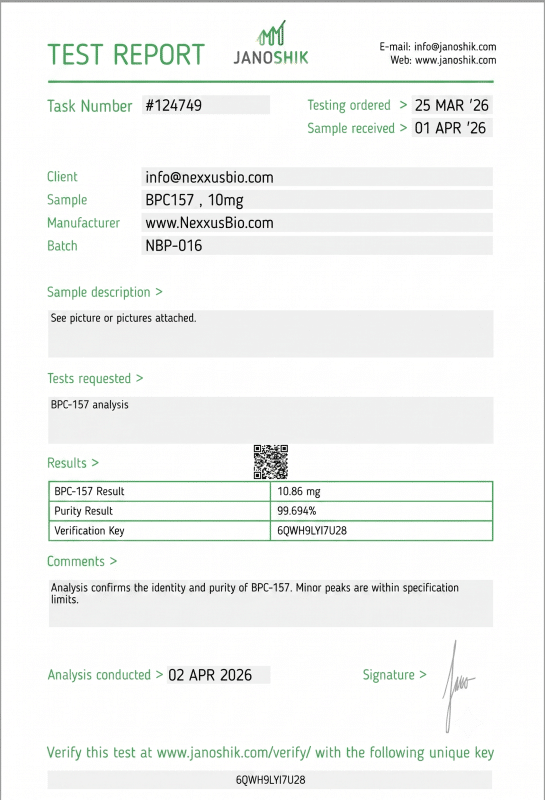
Cleanliness above 99 % is a figure that the customer naturally looks for in the research-grade segment. It’s not just a marketing statement. This parameter serves as a benchmark when evaluating the product and when comparing it with the competition. If a seller does not mention cleanliness at all or only mentions it in general without a documented framework, the transparency is insufficient.
The COA is another key element. The analysis certificate is not an additional supplement, but part of the professional presentation of the product. For the customer, it means that the parameters are not communicated only verbally, but have documentary support. In the case of peptides where precision is of high importance, this is a fundamental element of credibility.
The third area is batch consistency. Even a well-presented offer does not seem convincing unless it is clear that the seller is working systematically. Consistency does not only mean selling the same name repeatedly. It means uniform labeling, stable quality parameters, and order in the product documentation across the entire range.
The biochemical mechanism of BPC-157 action at the cellular level
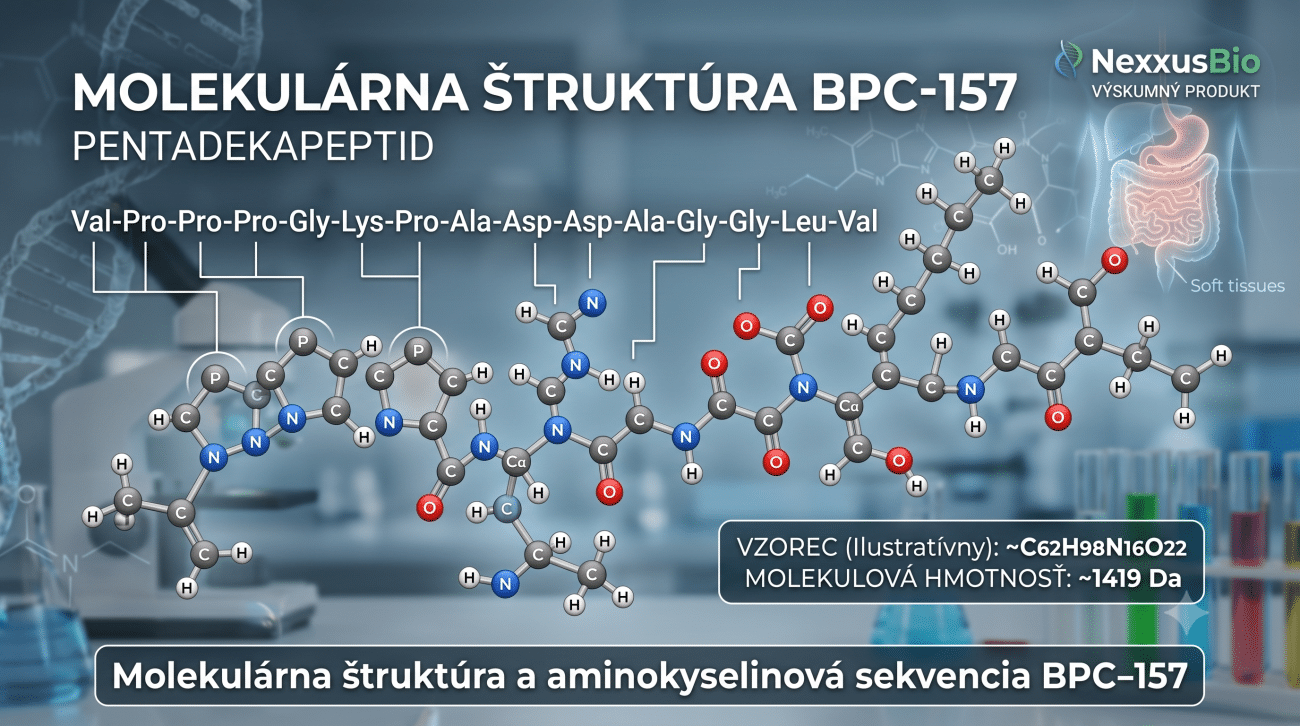
BPC-157 (Body Protective Compound-157) is a synthetic pentadecapeptide consisting of fifteen amino acids, originally isolated from human gastric juice. At the cellular level, this peptide exhibits complex pleiotropic effects through several interconnected signaling pathways, with its particularly pronounced proangiogenic and proliferative properties being documented in preclinical studies.
Modulation of VEGFR2 and angiogenic signaling
The key biochemical mechanism of BPC-157 sales in the context of the formation of new vessels is up-regulation of vascular endothelial growth factor receptor 2 (VEGFR2). Experimental data obtained in a rat hindlimb ischemic model showed that BPC-157 statistically significantly increases VEGFR2 expression at both mRNA and protein levels in vascular endothelial cells, without simultaneously increasing the ligand itself, VEGF-A. After binding to the peptide, VEGFR2 receptor internalization occurs through dynamin-dependent endocytosis — this process was experimentally confirmed using a dynerase inhibitor that blocked internalization while simultaneously suppressing downstream signaling. The activated receptor subsequently triggers the VEGFR2–Akt–eNOS signaling cascade, inducing nitric oxide (NO) production in endothelial cells, which is a necessary step for endothelial proliferation and migration during angiogenesis.
FBXO22–BACH1 mechanism and vascular regeneration
A recent study (2026, Cell Communication and Signaling) identified a new molecular axis responsible for the proangiogenic effect of BPC-157. Intracellular BPC-157 interacts through a proline residue at position 3 with the E3 ubiquitin ligase adaptor protein FBXO22. The resulting protein complex BPC-157–FBXO22 suppresses ubiquitinylation of the transcription factor BACH1, thereby preventing its proteasomal degradation. Stabilization of BACH1 leads to its accumulation in the nucleus and subsequent enhancement of the transcription of genes regulating the proliferation and tubularization of vascular endothelial cells. This mechanism has been verified in vitro It also represents the most precisely characterized molecular pathway of the effect of BPC-157 on angiogenesis, even in organotypic culture models.
Up-regulation of the growth hormone receptor
Through cDNA microarray analysis of tendinous fibroblasts isolated from the Achilles tendon of Sprague-Dawley rats, it was identified that the growth hormone receptor (GHR) is among the most up-regulated genes after exposure to BPC-157. The dose- and time-dependent increase in GHR expression was confirmed by RT-PCR, real-time PCR, and Western blot methods. Subsequent stimulation of these sensitized fibroblasts with growth hormone led to the activation of Janus kinase 2 (JAK2)—the primary downstream effector of GHR—and a statistically significant increase in cell proliferation measured by MTT assay and the expression of the proliferation marker PCNA. BPC-157 thus potentiates the fibroblasts’ response to circulating growth hormone by increasing the density of surface receptors, representing an important mechanism contributing to the regeneration of connective tissue.
Laboratory reconstitution and stability of the lyophilisate
Lyophilization — vacuum freeze-drying — is the standard method of preserving research peptides, in which free and bound water is removed by sublimation from the pre-frozen solution. The resulting product has the form of an amorphous solid cake (English). cake), in which molecular mobility is reduced to a minimum, thereby suppressing the main degradation mechanisms — hydrolysis of peptide bonds, deamination of asparagine and glutamic residues, oxidation of electron-rich side chains (Cys, Met, Trp), and microbial contamination.
Selection of solvent and preparation before reconstitution
The key variable in reconstitution is the choice of solvent. For the vast majority of research peptides, including BPC-157, bacteriostatic water for injection (BWFI, Bacteriostatic Water for Injection), which is sterile water preserved with 0.9% % benzyl alcohol (9 mg/mL). Benzyl alcohol inhibits the proliferation of microorganisms, allowing repeated sampling from the same vial for up to 28 days when stored in the refrigerator. As an alternative, 0.1–1% acetic % acid is used for hydrophobic peptides that are insoluble in BWFI; however, sterile water without preservative is suitable only for single-use preparations, as without a preservative it is susceptible to microbial contamination within 24 hours.
Before starting the procedure, it is essential to allow the lyophilized sample to acclimatize to room temperature for 15–30 minutes. When exposed to warmer air, the cold container undergoes condensation of airborne moisture on the internal walls, compromising the integrity of the powder and causing pressure imbalance, making precise solvent transfer difficult.
Protocol of reconstitution
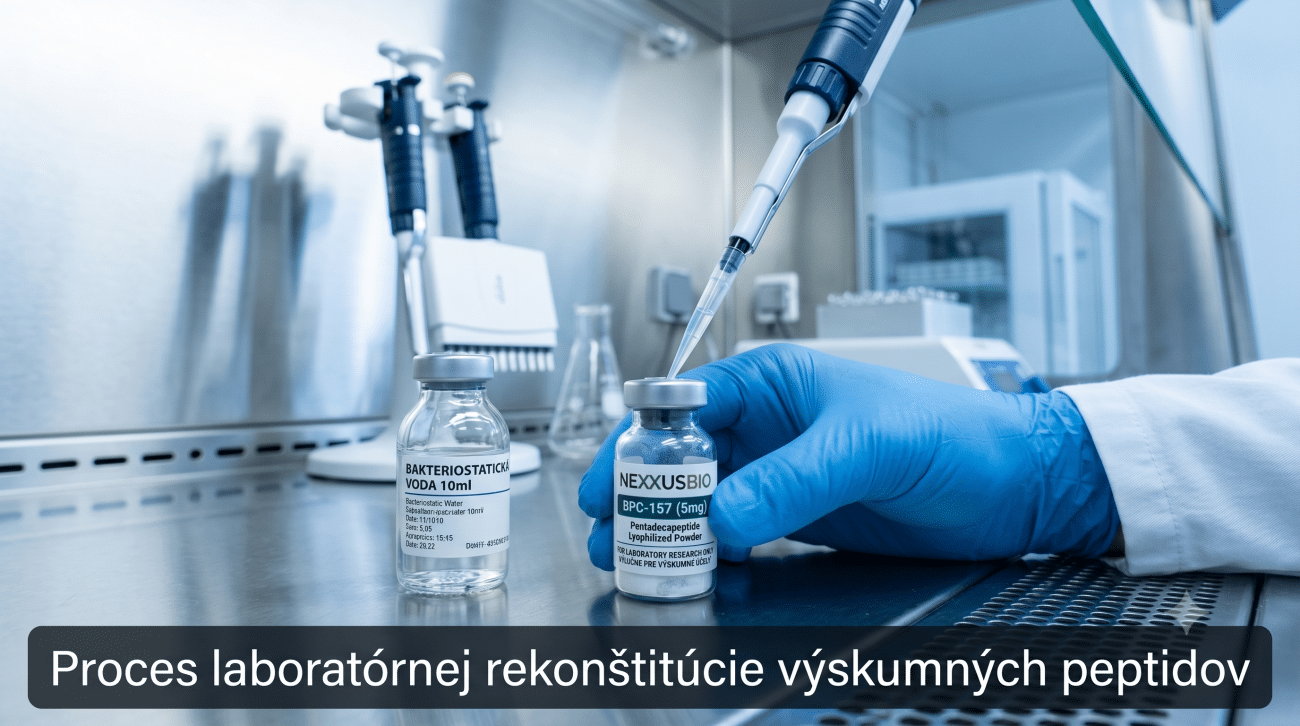
Aseptic technique is a prerequisite for reproducible results. Both the septum of the peptide vial and the vial with BWFI are disinfected with a swab containing 70% % isopropyl alcohol before each injection and allowed to dry for 30 seconds. The calculated volume of BWFI is withdrawn with a sterile syringe (usually 21–29 G) and injected. slowly along the inner wall peptide vial — not directly into the powder — to prevent mechanical denaturation. The vial is then gently rotated or shaken (swirling); shaking is contraindicated, as shear forces during intensive mixing can disrupt the secondary structure of the peptide and cause aggregation.
The resulting concentration of the solution is calculated using a simple formula:
c (mg/mL) = m (mg) / V (mL)
For example, a vial containing 5 mg of peptide reconstituted in 2 mL BWFI yields a solution with a concentration of 2.5 mg/mL. A standard insulin syringe U-100 corresponds to 1 IU of volume of 0.01 mL.
Storage conditions and stability
Lyophilized (unopened) vials retain chemical integrity during storage at −20 °C in the presence of a desiccant for months to years. The Accelerated Stability Study (Liquilabs) conducted on BPC-157 at 40 °C and a relative humidity of 75 % for 28 days showed a decrease in purity from ~98 % to ~96 %, while the active substance content remained within the range of 90–110 % according to European Pharmacopoeia requirements — which documents the significant thermostability of the lyophilized form.
After reconstitution, stability is significantly reduced. Solutions prepared in BWFI are stored at 2–8 °C, protected from light, and must be used within 14–28 days, depending on the peptide sequence. Long-term storage requires splitting into single-dose aliquots and freezing at −20 °C; repeated cycles of freezing and thawing are contraindicated as they lead to cumulative degradation. All samples are recommended to be labeled with the date of reconstitution and concentration for traceability purposes (traceability) experimental inputs.
What to watch out for when evaluating a seller
Many e-shops in this category fail on the details that are crucial. A common problem is an unclear product page, where there is a lack of logical data structure. The customer then has to search for basic information in a long text, or in some cases they won’t find it at all.
Overly general descriptions are also risky. If a product card uses broad formulations without precise packaging, forms, and documentation, it is not a professional presentation. In this segment, the content should be catalog-oriented and factual. Each piece of information should have its place and significance.
The categorization of the product range also deserves attention. When the offer is organized according to Research areas and the products are clearly separated; the orientation is significantly faster. On the other hand, mixed categories and inconsistent nomenclature increase the risk of incorrect selection.
An important sign of a serious seller is also the consistent separation of duties. research use from human and veterinary use. In the peptide research segment, this is not a formal note at the bottom of the page. It is a fundamental component of proper communication. If this framework is blurred or suppressed, it reduces the professional level of the entire offering.
What a quality product selection process looks like
When choosing BPC-157 for sale, it pays to proceed systematically. First, verify that the product page provides the exact name, form, and quantity without ambiguity. Next, check that the purity and availability of the COA are communicated transparently. Then it makes sense to look at the stock availability and the overall consistency of the catalog.
If any of these steps are missing, there is a unnecessary risk. The customer is not dealing with the product itself, but rather with the basic data that should have been provided from the beginning. This is exactly the situation that professional research-grade sales tries to avoid.
In practice, the most effective e-shop is one where navigation is possible within a few seconds. The product is placed in the correct category, packaging is immediately visible, documentation is clearly presented, and availability is not hidden. This sales model is more suitable for specialized assortments than content built on general promises.
Why transparency is more important than a wide range of products
A wide range of products in itself does not mean higher quality of the purchase. In the peptide segment, a narrower but precisely curated catalog is often more valuable than a broad offering with no clear parameters. The customer is not looking for the most items. They are looking for orderliness, documentation, and a consistent standard.
This is also the reason why professional sellers base their communication on facts. When the packaging, form, cleanliness, documentation and availability of a product are clearly stated, decision-making is faster and more accurate. NEXXUS BIO works with just this model – emphasizing the clarity of the product range, transparent presentation of quality and a clear separation of the research purpose from other forms of use.
Therefore, when it comes to BPC-157, it makes sense to evaluate the seller based on discipline in the details. Not based on aggressive claims, but on how accurately they can name and substantiate what they are selling. In the sensitive segment of research-grade products, this precision is the most practical filter.
BPC-157 sales in the EU in context
The logistical aspect also plays a role for a customer from Slovakia or the broader EU market. Fast order processing, real stock levels, and clear availability communication are significant advantages for specialized assortments. If a product is in stock, the information should be provided directly, not hidden in business terms or ambiguous wording.
It is also important that the entire sales process is clear from the catalog to the order. The more specialized the product, the less room for ambiguity. Therefore, a quality BPC-157 sales page should look more like a neatly organized laboratory catalog than a regular advertising e-shop.
If you are careful when choosing form, quantity, purity, COA, batch consistency, and clear labeling of the research use, you will avoid most of the problems that are common in this segment. In such a product, order in the data is often more valuable than any significant sales slogan.
Conclusion
When selecting BPC-157, it is important to pay attention to the molecular structure and amino acid sequence, which have a fundamental impact on the product’s efficacy and safety. A thorough analysis of these aspects, along with the previous steps, can ensure that the selected product meets high quality standards. Taking into account these technical details increases the likelihood of successful and effective use of BPC-157 in further research. A responsible approach when selecting such products can significantly influence the results of studies and applications.