


Blog
7 criteria for selecting a peptide supplier


When buying research materials, it is not enough to compare the product name and the price per vial. 7 criteria for selecting a peptide supplier it creates a practical framework within which it is possible to assess whether the offer is suitable for a laboratory, analytical or collecting context. The data that can be verified are decisive: declared purity, documentation of the batch, precisely stated form, quantity, and clear sales rules.
A peptide supplier should not act as an opaque sales channel. With research-grade materials, quality also includes the way product parameters are presented, updated, and retrievable. The following criteria will help separate specific information from general claims.
7 criteria for selecting a peptide supplier
1. Declared purity and method of its introduction
Cleanliness is one of the first parameters that should be checked. However, the claim of high quality without providing specific data does not provide a sufficient basis for comparison. A serious product presentation lists the declared purity in percentages and clearly distinguishes it from the total content of the vial or the total weight of the package.
With research peptides, purity above 99% is often monitored %. This figure only has meaning if it is linked to the corresponding batch and supported by available analysis. It is also advisable to verify whether the supplier uses the same labeling standard across the entire range. Inconsistent entries, vague wording, or missing percentage values make it difficult to objectively assess the material.
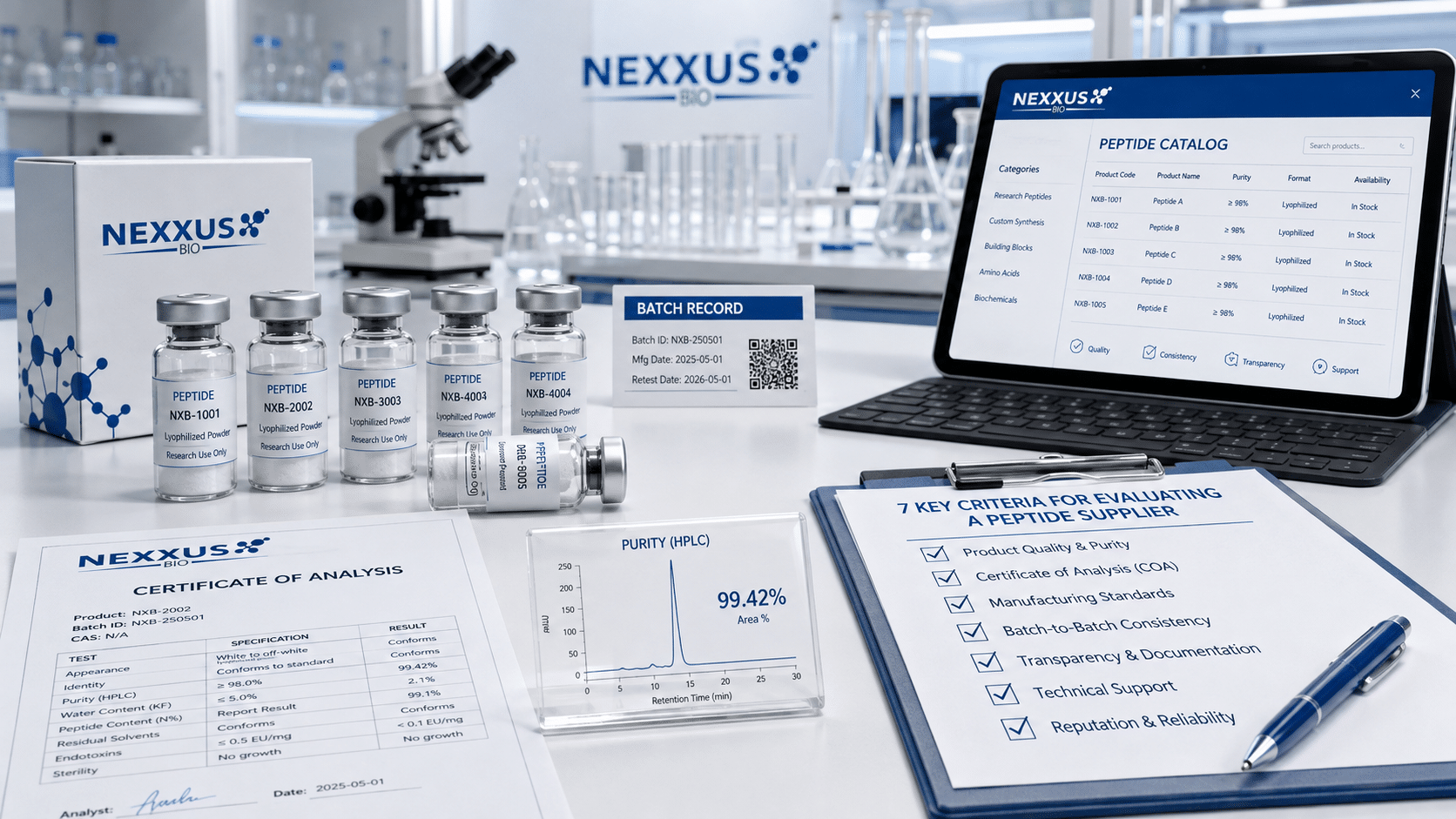
2. COA documentation related to a specific batch
The analysis certificate, commonly referred to as a COA, is a practical document for verifying the declared properties of a material. It should not be merely a general template without identifying the product. Verifiable documentation typically includes the name of the analyzed substance, the batch number, the purity result, the analytical method used, and the date of issuance or analysis.
It is important that the information on the packaging matches the information in the documentation. If the batch number cannot be matched, the COA does not have sufficient probative value for a specific piece of material. Therefore, it is worthwhile for the supplier to assess not only the presence of certificates but also their readability, scope, and systematic availability.
3. Batch consistency and traceability
A product presented in a high-quality way only once does not yet indicate the long-term reliability of the supplier. When ordering repeatedly, it is essential whether the brand uses clear labeling of batches and whether it can maintain the same level of information even during new stock replenishments.
Consistency does not mean that every batch will have identical analytical numbers. In laboratory materials, results between batches can naturally vary slightly. What matters is that these differences are transparently recorded and that the buyer can verify which batch a specific documentation refers to.
Traceability is also important when storing and recording in a laboratory environment. Clear packaging labeling, batch number, and available documents reduce the space for exchanging materials or interpreting incomplete data.
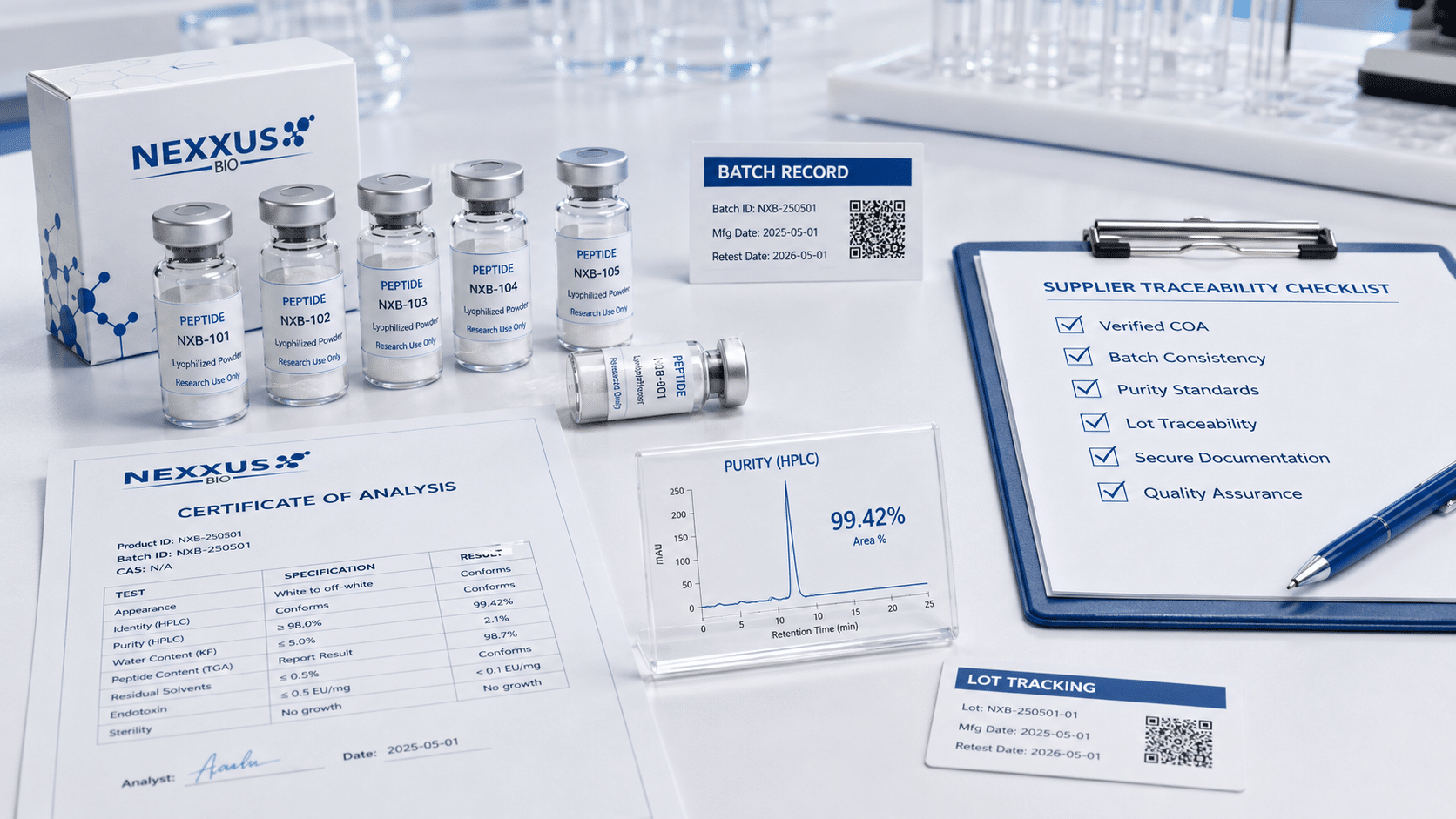
4. Exactly stated form, quantity and composition
The name of the peptide itself is not a complete product specification. The supplier must clearly state whether the material is supplied, for example, in the form of lyophilized powder, What is the declared amount in the vial and whether it is a standalone product or a defined combination of peptides.
This criterion is important especially for products with similar names or combined formulations. A clear product card separates the substance name from the weight, packaging form, and availability in stock. If any of these details is missing, two seemingly similar offers cannot be properly compared.
The same principle applies to supplementary laboratory material. Labeling bacteriostatic water or the acetic acid should be supplemented with the relevant packaging and labeling parameters. Accuracy in product data does not create a marketing impression, but is the basis for proper record-keeping and selection.
5. Transparent categorization of the product range
The broader catalog is to be organized so that the user can quickly distinguish between the individual research areas, individual peptides, combinations, and related laboratory materials. Good categorization does not require expert knowledge at the level of the supplier’s internal code. It allows for orientation based on the product name, material type, and declared parameters.
Transparency also means that the product is not presented through unverifiable promises. NEXXUS BIO operates on a catalog approach, where form, packaging, quantity, availability, purity, and COA play a key role. For the buyer, it is therefore easier to compare items without having to rely on vague descriptive claims.
A supplier that mixes product data with user manuals outside of the research environment reduces the clarity and credibility of its communication. For research-grade products, the usage boundary should be clearly defined.
6. Clear definition of the product’s purpose
Research peptides They must be labeled as materials intended exclusively for research, analytical, or collecting purposes. This labeling is not a formal note at the end of the page. It is essential information that determines the framework of the entire offering and the way the supplier communicates the product characteristics.
A trustworthy vendor avoids medical claims, guidelines for humane use, or veterinary recommendations. Instead, it provides technical data and documentation relevant to the controlled scientific environment. This approach protects the accuracy of the information and promotes responsible handling of materials.
When evaluating a website, check whether the restriction on use is visible in the products themselves and in the general terms and conditions. If the research status is hidden, formulated ambiguously, or contradicts the content of the product descriptions, this is a reason for increased caution.
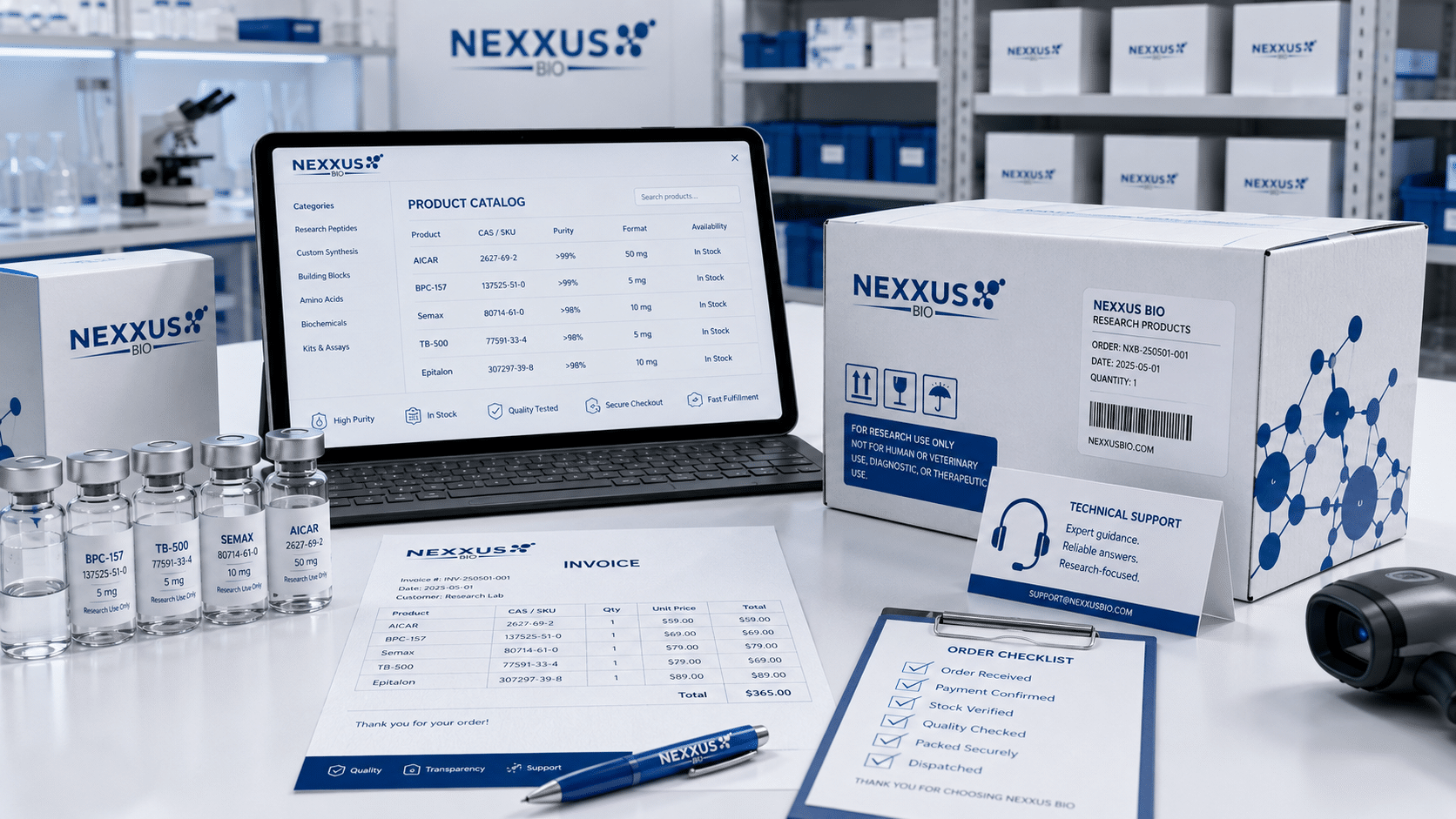
7. Availability, order processing and professional support
Even a precisely documented product is not a practical option if the supplier does not display real stock availability or does not provide clear information about the processing of the order. In e-commerce sales within the EU, it is useful for the customer to see the stock status directly next to the item and be able to distinguish available goods from items that are temporarily sold out.
The processing speed is not the only factor. It is equally important that the support is able to answer the questions regarding the order, packaging, documentation, or the availability of the batch in a meaningful way. Professional communication is judged by precise responses, not by general sales formulations.
With this criterion, one must also consider one’s own priorities. For a one-time collection purchase, the availability of a specific package may be crucial. For repeated laboratory procurement, the stability of the product range, the traceability of documentation, and the predictability of the ordering process are of greater importance.
How to use criteria in a real comparison
The most practical procedure is to compare two or three offers based on the same data. For each, record the declared purity, the availability of the COA, the batch number, the product form, the package weight, the warehouse status, and the clarity of the research label. The price only makes sense after this comparison. A lower price without traceable documentation or without clearly stated package contents may not represent comparable value.
It is also useful to check whether the product information is consistent across the entire page. If a supplier only provides accurate parameters for a few items, it cannot be automatically assumed that the same standard applies to the rest of the product range. The quality of presentation is evident in a consistent manner: in the products, COA documents, batch labeling, and in support communication.
A well-chosen supplier provides sufficient verifiable data to ensure that the selection is not based on assumptions. It is precisely this discipline in documentation and labeling that is more useful in the research-grade range than any significant sales promise.
The content of this article serves solely for informational, educational and academic purposes. The information provided here is based on available scientific studies and professional literature on research chemical substances. In no case does the text constitute medical recommendations, diagnosis, instructions for treatment, or an invitation to human or veterinary consumption. The products mentioned in the article, as well as the entire range of the NEXXUS BIO e-shop, are classified as research chemicals and laboratory reagents intended strictly for use in a controlled scientific environment (Research Use Only). The website operator assumes no responsibility for the incorrect interpretation of the text or any misuse of the described materials.