


Blog
Retatrutide accurately studies metabolism in research

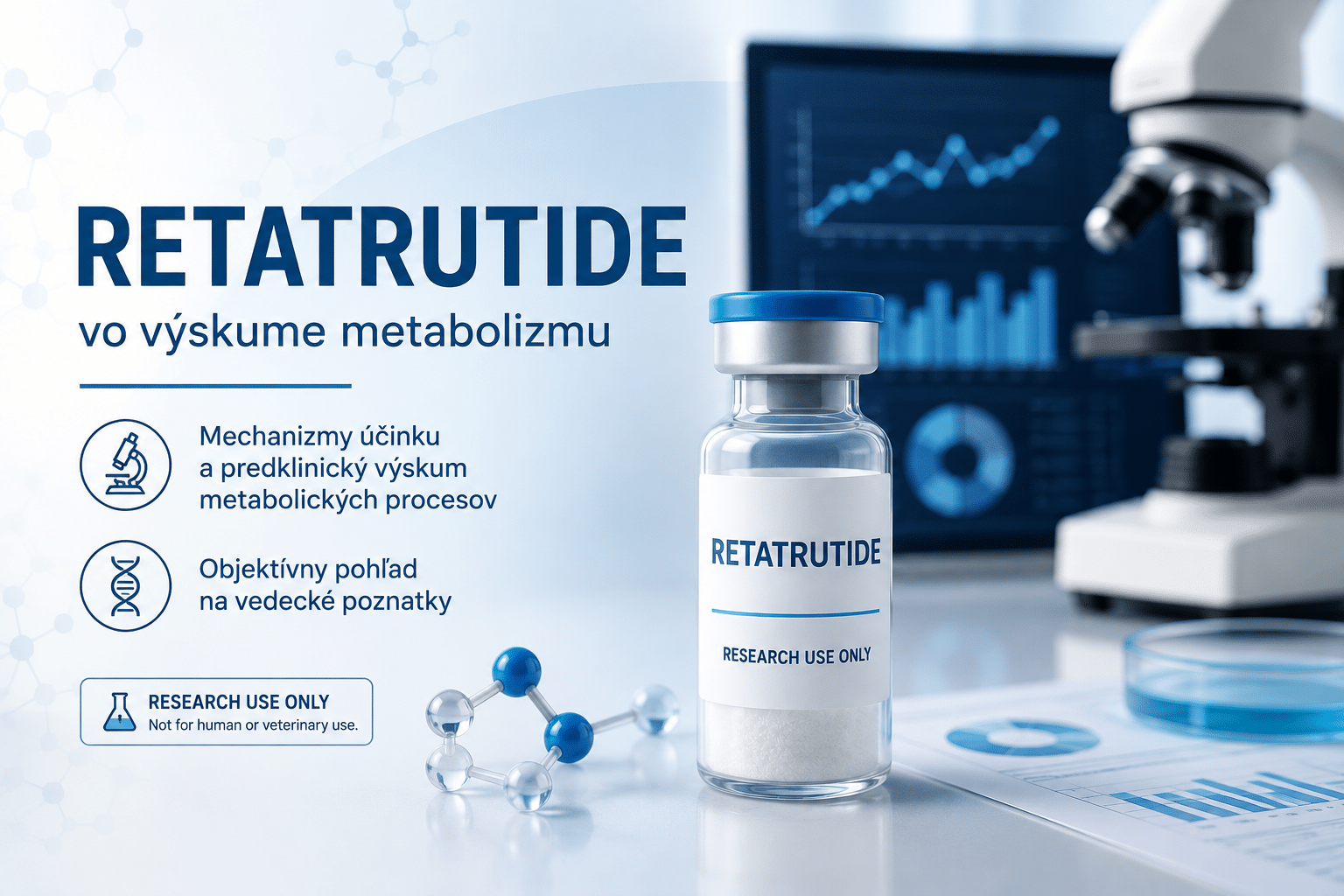
Retatrutide metabolism research takes the study of metabolism to a new level. It involves examining a peptide molecule with activity against the GLP-1, GIP, and glucagon receptors. It is the combination of these three receptor pathways that makes retatrutide a relevant object for laboratory models of energy homeostasis, substrate regulation, and receptor signaling. At the same time, careful interpretation of the data is required, as the result depends on the type of model, the analytical method, and the proven identity of the sample being studied.
Why retatrutide in metabolism research is specific
Metabolism is not a single process but a system of interconnected regulatory events. It involves the processing of glucose, lipids, amino acids, energy expenditure, hormonal signaling, and the cells’ response to the availability of nutrients. Therefore, when studying molecules with multiple receptor activities, it is appropriate to evaluate not only the isolated effect on a specific marker but also the broader context of the regulatory network.
Retatrutide is studied in the scientific literature as a triple agonist of the GLP-1, GIP, and glucagon receptors. Each of these pathways has a distinct biological role, and their simultaneous activation may not produce the same result in every experimental system. The difference may result from the density of receptors, the cell line used, the type of biological model, the time of exposure, and the chosen analytical endpoint.
From a research perspective, it is essential that the triple receptor profile cannot be reduced to a simple labeling of „stronger“ or „weaker“ types. What is relevant is selectivity, relative activity at individual receptors, signaling kinetics, and reproducibility of measurements. Scientific publications should therefore be read with regard to their methodology, not just through the final value presented in the abstract.
Three receptor axes, one experimental problem
In research, the GLP-1 receptor is often associated with signaling related to nutrient intake and metabolic regulation. The GIP receptor represents another incretin axis, while the glucagon receptor is studied primarily in connection with the mobilization of energy substrates and hepatic signaling. It is important to note that in retatrutide these axes do not act in isolation.
Therefore, the laboratory result can capture both the direct receptor response and subsequent changes in gene expression, intracellular mediators, or metabolic pathways. When comparing studies, it is necessary to separate the primary receptor test from more complex models. The data from the binding test, the cAMP test, the cellular model, and the whole-organism model have different significance and cannot be mechanically confused.
What a quality metabolic experiment should measure
Well-designed research does not start with a molecule but with a question. If the goal is to verify receptor activity, other control parameters will be crucial than monitoring changes in metabolite or transcriptional responses. An ambiguously defined endpoint can generate a large amount of data without a clear interpretative framework.
In retatrutide studies, receptor reporter systems may be relevant, determination of secondary pathways, profiling of selected genes expression, metabolomic analyses, or evaluation of sample stability during the experiment. The choice of method always depends on the hypothesis. For example, increasing or decreasing one biomarker by itself does not yet explain which receptor mechanism is responsible for the observed response.
Controls play a crucial role in this type of research. Negative control helps to distinguish the fundamental signal of the model from the response to the substance being studied. Reference material provides a benchmark for the analytical method. Technical replicates, in turn, show whether the measurement is stable. Without these elements, even an interesting result can be methodologically weak.
Where do the differences between studies arise?
The most common problem is not a lack of data but rather their uncomparability. Differences between published results can arise from the use of a different receptor test, a different cell line, a different incubation time, a different method of evaluation, or a different quality of the material. Furthermore, with peptides, one must take into account possible degradation, adsorption to surfaces, and sensitivity to inhibitors. conditions of manipulation.
The scientific interpretation must also respect the boundaries of translation. Observations in an isolated system do not automatically confirm the same mechanism in a more complex model. Likewise, the result from one model does not represent a universal rule for the entire metabolism. Therefore, accuracy in the formulation of conclusions is part of the quality of research, not merely a formal caution.
The analytical quality of the sample determines the reliability of the data
With research peptides, the biological hypothesis is only one part of the work. The other part is the analytical certainty that the material under study corresponds to the declared identity and quality. Labeling on the packaging alone is not sufficient. Data on the batch, declared purity, material form, quantity, and available documentation are particularly relevant for laboratory evaluation.
The Certificate of Analysis – COA – should be read as a basis for evaluating a specific batch, not as a general marketing statement. It is advisable to verify which method was used, whether the documentation identifies the specific batch, and what parameters it actually states. Chromatographic purity is an important parameter, but by itself it does not tell all about the characteristics of the sample. Depending on the experiment, the identity can also be important using mass spectrometry, the water content, the presence of by-products, or consistency between batches.
Complete traceability of the material is also important for the research team. This includes the internal labeling of the sample, the batch number, the date of receipt, documentation for the analysis, and recording of laboratory work conditions. Such a system does not complicate the research. On the contrary, it allows later to distinguish a biological deviation from a problem related to the material or the procedure.
NEXXUS BIO approaches research peptides through clear labeling of the form, packaging, availability, and documentation of specific products. For the laboratory environment, this order is essential especially when comparing results between multiple experiments or time points.
Transparent approach is more accurate than strong claims
Retatrutide is an interesting object of metabolic research, but its significance does not stem from marketing labeling or an isolated result alone. It arises only through the combination of high-quality experimental design, appropriately selected controls, precise analysis, and discipline in interpretation. The highest value is given to data that clearly show what was tested, how the sample was characterized, and where the possibilities of the derived conclusion end.
Therefore, when choosing the material for research, it is reasonable to start with documentation, the identity of the batch and methodological consistency with the planned experiment. It is these details that create the conditions so that the metabolic signal is not just an interesting observation but data that can be reliably compared and further verified.
Legal notice
The content of this article serves solely for informational, educational and academic purposes. The information provided here is based on available scientific studies and professional literature on research chemical substances. In no case does the text constitute medical recommendations, diagnosis, instructions for treatment, or an invitation to human or veterinary consumption. The products mentioned in the article, as well as the entire range of the NEXXUS BIO e-shop, are classified as research chemicals and laboratory reagents intended strictly for use in a controlled scientific environment (Research Use Only). The website operator assumes no responsibility for the incorrect interpretation of the text or any misuse of the described materials.